Med Spa Membership Programs That Don't Leak Money: The 2027 Playbook

Why memberships are the retention lever in 2027
For most of the last decade, the aesthetics industry grew on acquisition. That is no longer the trajectory. In 2026, new client visits at US and Canadian med spas fell 11% year over year. Existing client visits fell 2%. Among clients who did rebook, a striking share of those rebooked appointments were later cancelled. Acquisition got harder, and holding on to the patient who already walked through the door became the main lever left.
Against that backdrop, med spa membership sales grew roughly 13% year over year. The practices that had invested in a working membership program already had recurring revenue the rest of the market did not. The ones that had not were suddenly interested.
A well-designed membership does three things at once. It converts a one-time patient into monthly recurring revenue. It increases visit frequency compared to non-member patients. And it creates a patient population harder to lose to a competitor down the road.
The four membership models, compared
Membership is a design problem more than a pricing problem. Four models dominate the industry; most practices run some combination of them.

1. Monthly fee / subscription
The patient pays a fixed monthly fee (commonly $149, $199, or $249) and in exchange receives a package of included services each month plus member pricing on everything else. This is the most common model and the easiest for patients to understand.
Example tiering: Silver at $149 (one facial or one HydraFacial per month, 10% off everything else), Gold at $249 (one facial plus one add-on per month, 15% off), Platinum at $449 (monthly facial plus quarterly injectables credit, 20% off, concierge rebooking).
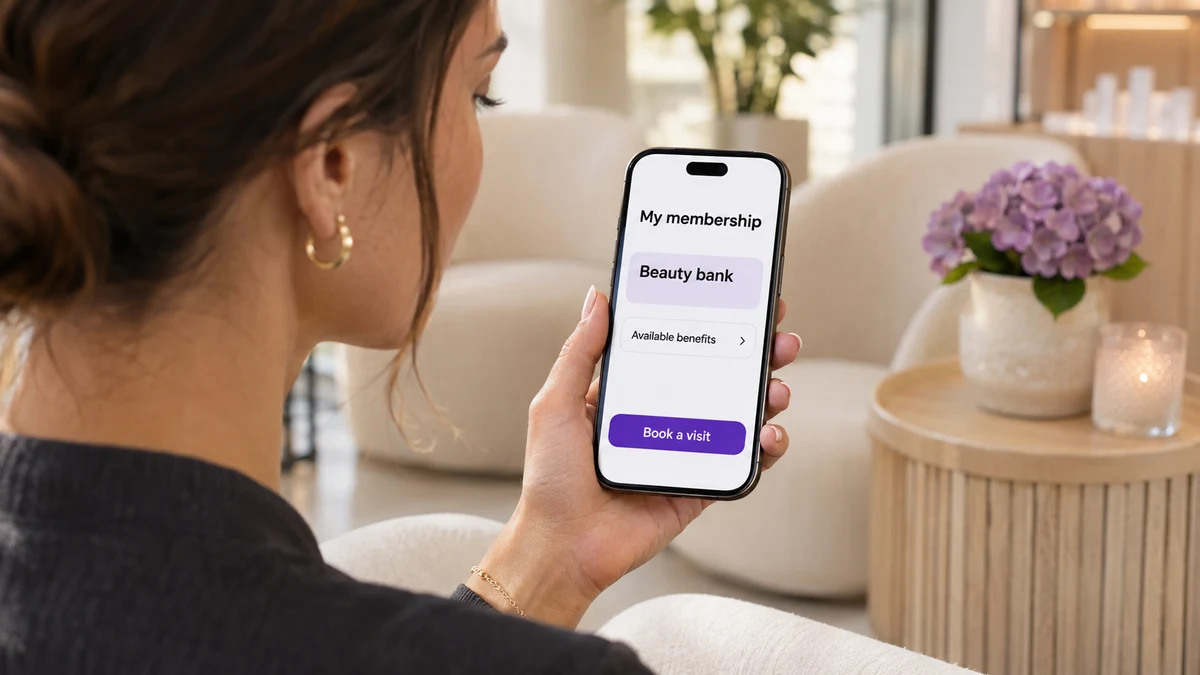
2. Beauty bank / credit accrual
The patient pays a fixed monthly fee that accrues as credit toward any service. It solves the use-it-or-lose-it churn problem of traditional subscriptions, because the credit does not expire.
Example: $200 per month accrues as $200 in bank credit. After 12 months the patient has $2,400 in credit plus member pricing on the services they spend it on. The patient feels like they are saving for something, not paying for air.
3. Service-specific
Membership attaches to a single category — injectables, laser hair removal, body contouring. The patient pays upfront or monthly for a defined course of treatment over 6 or 12 months. Works well for compliance-heavy treatments where a defined course materially improves outcomes.
4. Loyalty points
No recurring fee. Patients accrue points on every transaction and redeem against future spend. Less a retention mechanism than a nudge for repeat purchase — useful for first-visit patients not yet ready to commit to a membership.
Most mature practices run a monthly or beauty-bank membership as the primary, with loyalty points layered underneath as a free on-ramp.
Pricing the tiers — the $149–$249 sweet spot
Industry benchmarks from aesthetic management platforms put the pricing sweet spot for monthly med spa membership between $149 and $249 per month, with two or three tiers. Fewer than two tiers and you lose the patients who want more; more than three and decision fatigue stops the signup. Each tier should price at 70% to 80% of the retail value of what it includes. Patients feel real savings; the practice keeps a defensible margin.
Why discount-first memberships churn
The single most common failure pattern: practices launch a membership built on discounts. "Join and get 20% off everything." Those programs sell well out of the gate and churn out of the back door, because the patient feels no attachment — only a math advantage — and when a competitor offers a bigger math advantage, they leave.
Access and experience are what compound. Priority booking during the holiday window. Member-only events. A dedicated patient coordinator. First access to new treatments. Concierge rebooking. Those are patient benefits a competing practice cannot match with a bigger discount, because they are structural, not price-based.
The lapsed-member nudge sequence
Memberships leak at a predictable cadence. If a member has not booked in 60 days, start the nudge sequence. At 60 days, a soft reminder with an "available this week" booking link. At 90 days, a personal outreach from their patient coordinator. At 120 days, a retention offer — a complimentary add-on, not a discount on membership. Practices that automate those three touches cut involuntary churn by double digits in the first full year.
Legal gotchas — the part most practices miss
Automatic renewal laws (ARL) apply in California, New York, Oregon, and a growing list of other states. The membership contract needs clear disclosure of recurring charge amount, clear cancellation path, and renewal reminders at defined intervals before renewal. Enforcement has been picking up. Clear this one with counsel before launch, especially if you operate across states.
Tech stack: billing, enforcement, lapsed-member triggers
A working membership program needs the stack to:
- Auto-bill on the member's enrollment date each month, retry on failed charges, and suspend access on repeated failure
- Enforce member pricing automatically at point of sale, so staff do not have to look it up
- Track used vs unused benefits per member and expose it to the patient (patients who see their balance renew)
- Trigger the lapsed-member sequence automatically based on last visit date
- Report monthly MRR, churn rate, LTV per tier, and benefit utilization
If any one of those lives in a separate system from the rest, the staff will stop using parts of it within 60 days.
How BoomerangFX handles memberships end to end
BoomerangFX RUN handles the full membership stack: enrollment with e-sign ARL-compliant contract, auto-rebill with dunning, member pricing enforced at checkout, benefit utilization tracking, and the lapsed-member automation sequence inside the same system that holds the chart and the booking. One source of truth, one bill the patient sees, one dashboard the owner looks at.
Frequently asked questions
How much should a med spa membership cost?
The pricing sweet spot is $149 to $249 per month for a monthly subscription membership, with two or three tiers. Pricing each tier at 70% to 80% of retail value keeps the savings feel real for the patient and the margin defensible for the practice.
What is the difference between a beauty bank and a monthly membership?
A monthly membership gives the patient defined included services each month plus member pricing — use-it-or-lose-it. A beauty bank accrues the monthly fee as redeemable credit toward any service, so nothing is lost if the patient does not book that month. Beauty banks tend to see lower churn; monthly memberships drive higher visit frequency.
Do med spa memberships actually make money?
Yes, when designed around access and experience rather than deep discounts. Memberships produce predictable monthly recurring revenue, higher visit frequency than non-member patients, and roughly 3x the lifetime value of a patient who books twice a year. Industry membership sales grew about 13% year over year in 2026.
How do you reduce churn in a med spa membership?
Automate a lapsed-member nudge sequence at 60, 90, and 120 days since last visit. Build the membership around access and experience benefits a competitor cannot match with a discount. Report benefit utilization back to the patient so they see what they are getting.
Is a loyalty program the same as a membership?
No. A loyalty program accrues points on every transaction with no recurring fee — a nudge for repeat purchase. A membership charges a recurring fee in exchange for included services and member pricing. Many practices run both: loyalty as a free on-ramp, membership as the committed tier.


