The Rebooking Problem: Why 37% of Med Spa Rebookings Cancel — and How to Fix It


The 2026 data every med spa owner should see
Industry data from across US and Canadian med spas in 2026 tells a consistent story. New client visits declined 11% year over year. Existing client visits fell 2%. And of the patients who did rebook on their way out, roughly 37% of those rebooked appointments were later cancelled. For practices used to acquisition-first growth, that is the single biggest shift of the year.
Retention is the primary growth lever for 2027. Not because acquisition stopped working — it still does — but because the math moved. A patient you already have costs five to seven times less to keep than to replace. When acquisition cost is rising and acquisition volume is falling at the same time, the practices that win are the ones that stopped leaking patients at the back door.
Why acquisition-first thinking stopped working
For most of the last decade, the aesthetics playbook was simple: spend on Meta and Google, book consults, convert. The platforms rewarded it, the margins supported it, and the patient supply was there. By 2026, three things had changed: iOS tracking cuts broke cold-audience targeting precision, treatment-category competition drove CPLs up, and patient discretionary spend cooled on anything that felt like a luxury.
Acquisition still works. It just no longer forgives sloppy retention. A practice that spends $200 to acquire a patient who no-shows the follow-up has lost the acquisition cost twice: once in the wasted spend, once in the forgone LTV. Fixing the retention side of the equation is the single highest-leverage operational project most med spas have available right now.

The five fixes
1. Deposit at booking — how much and how to communicate it
The single most effective lever. A deposit of $50 to $100 taken at booking (applied to the service at the appointment) cuts no-shows and late cancellations in half for most practices. Deposits are legal in every US state when the terms are disclosed clearly at booking and when the cancellation window is reasonable (24 to 48 hours is standard).
How to communicate it: name the deposit as a credit toward the service, not a penalty. "We hold your appointment with a $75 credit toward your treatment" lands differently than "We charge a $75 cancellation fee." Patients accept the first; they argue with the second.
For members and high-LTV patients with strong attendance history, waive the deposit automatically. The deposit solves a specific risk; do not apply it where the risk is zero.
2. The 72 / 24 / 2 hour reminder cadence
One reminder is not enough. Three is the floor. The pattern that works:
- 72 hours out: email with the appointment summary and the cancellation window. Low-friction reschedule link.
- 24 hours out: SMS with the same info, phrased for action. "See you tomorrow at 2 pm with [injector name]. Need to reschedule? [link]"
- 2 hours out: SMS reminder with location, parking, and any pre-treatment instructions.
The 72-hour touch is what moves cancellations out of the same-day window and into a time slot the practice can still refill.
3. Automated waitlist fill
When a slot opens inside 48 hours of the appointment, it should fill itself. A waitlist of patients who said yes to "first available" slots, pinged automatically when a cancellation hits the calendar, recovers a meaningful share of what would otherwise be dead air on the injector's column. Manual front-desk waitlists do not run in the chaos of a Thursday afternoon; automated ones do.
4. Injector-level rebook rate as a KPI
The rebook rate at checkout is the leading indicator of retention. Measured at the injector level, it exposes a performance pattern that aggregate practice numbers hide: injector A rebooks 70% of patients at checkout, injector B rebooks 40%. Over a year, that gap is the difference between a full column and a half-empty one. When the rebook rate is visible, it moves. When it is not tracked, it drifts.
Report injector-level rebook rate monthly alongside production, cross-sell rate, and retention. It is a coaching conversation, not a disciplinary one.
5. The one-click rebook at checkout
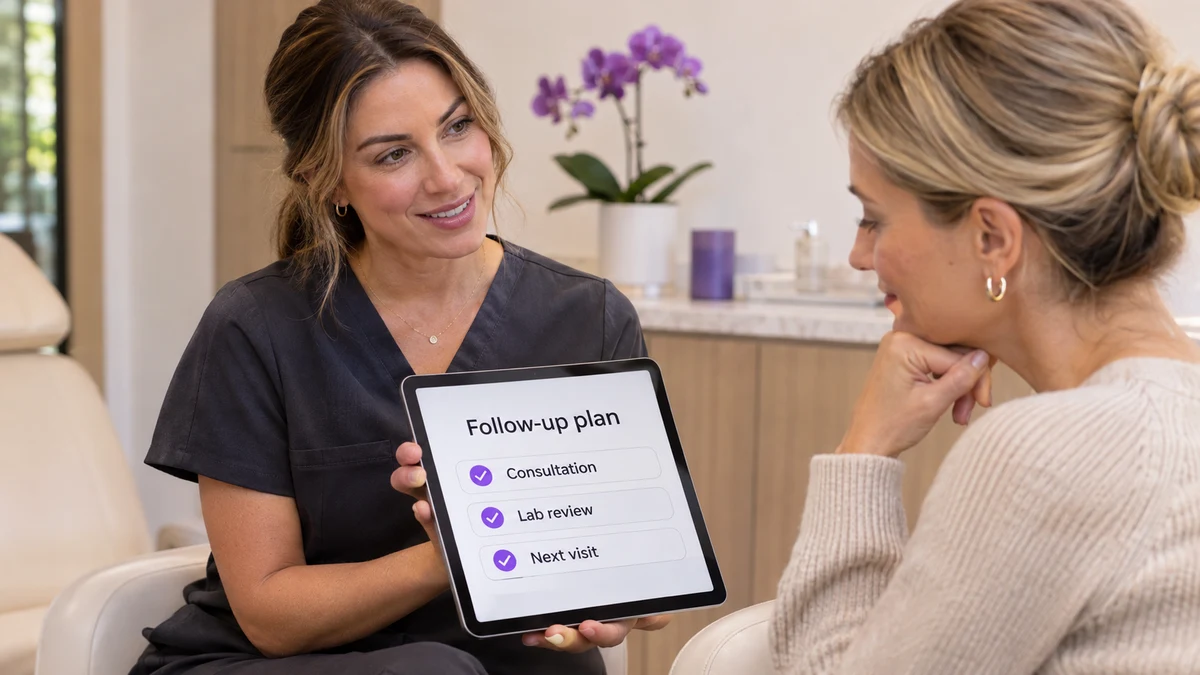
The cheapest cancellation to prevent is the one where the patient never rebooked in the first place. The practices with the highest rebook rates train the front desk to do two things at checkout: name the recommended cadence for the service ("Botox at 12 weeks, so we are looking at [date]"), and book the next appointment on the spot, in under 90 seconds. A "reminder card" handed to the patient to book later is a cancellation. A date on the calendar is a commitment.
What to track, monthly
Five numbers tell you whether the retention stack is working:
- Rebook rate (overall and per injector)
- Lead time from booking to appointment
- Cancellation rate (and the share inside the 24-hour window)
- No-show rate
- Patient LTV, segmented by rebook behavior
A practice that cannot produce those numbers inside two minutes of being asked is a practice that is relying on front-desk discretion to run retention. That is not a scalable model.
How BoomerangFX automates the whole retention stack
BoomerangFX RUN runs the deposits, the 72/24/2 reminder cadence, the automated waitlist fill, the one-click rebook at checkout, and the injector-level rebook reporting as parts of the same system that holds the chart and the schedule. No third tool, no Zapier, no gap between the booking engine and the follow-up. Practices that move retention automation into BoomerangFX from a stack of separate tools typically see effective no-show rates drop by half in the first full quarter.
Frequently asked questions
What is a good no-show rate for a med spa?
Under 5% is strong. 5% to 10% is the healthy industry middle. Above 10% signals a retention stack that is not running, usually missing deposits or the 72-hour reminder touch.
Should a med spa charge a deposit for appointments?
Yes, with exceptions. A $50 to $100 deposit applied as credit toward the service cuts no-shows and late cancellations by roughly half at most practices. Waive it for members and high-LTV patients with a clean attendance history. Disclose the terms clearly at booking.
How do you get patients to rebook before they leave?
Train the front desk to recommend a specific cadence for each service (Botox at 12 weeks, filler at 9 months, HydraFacial monthly) and to book the next appointment on the spot at checkout. A date on the calendar is a commitment. A reminder card handed to the patient to "book later" is a cancellation.
What is the best appointment reminder cadence?
72 hours out via email, 24 hours out via SMS, 2 hours out via SMS with location and prep instructions. The 72-hour touch is what moves cancellations out of the same-day window and into a slot the practice can refill.
How do I reduce cancellations at my med spa?
Deposit at booking, three-touch reminder cadence, automated waitlist fill when a slot opens, injector-level rebook rate as a KPI, and one-click rebook at checkout. Run all five and most practices cut their effective no-show rate by more than half in a quarter.


